
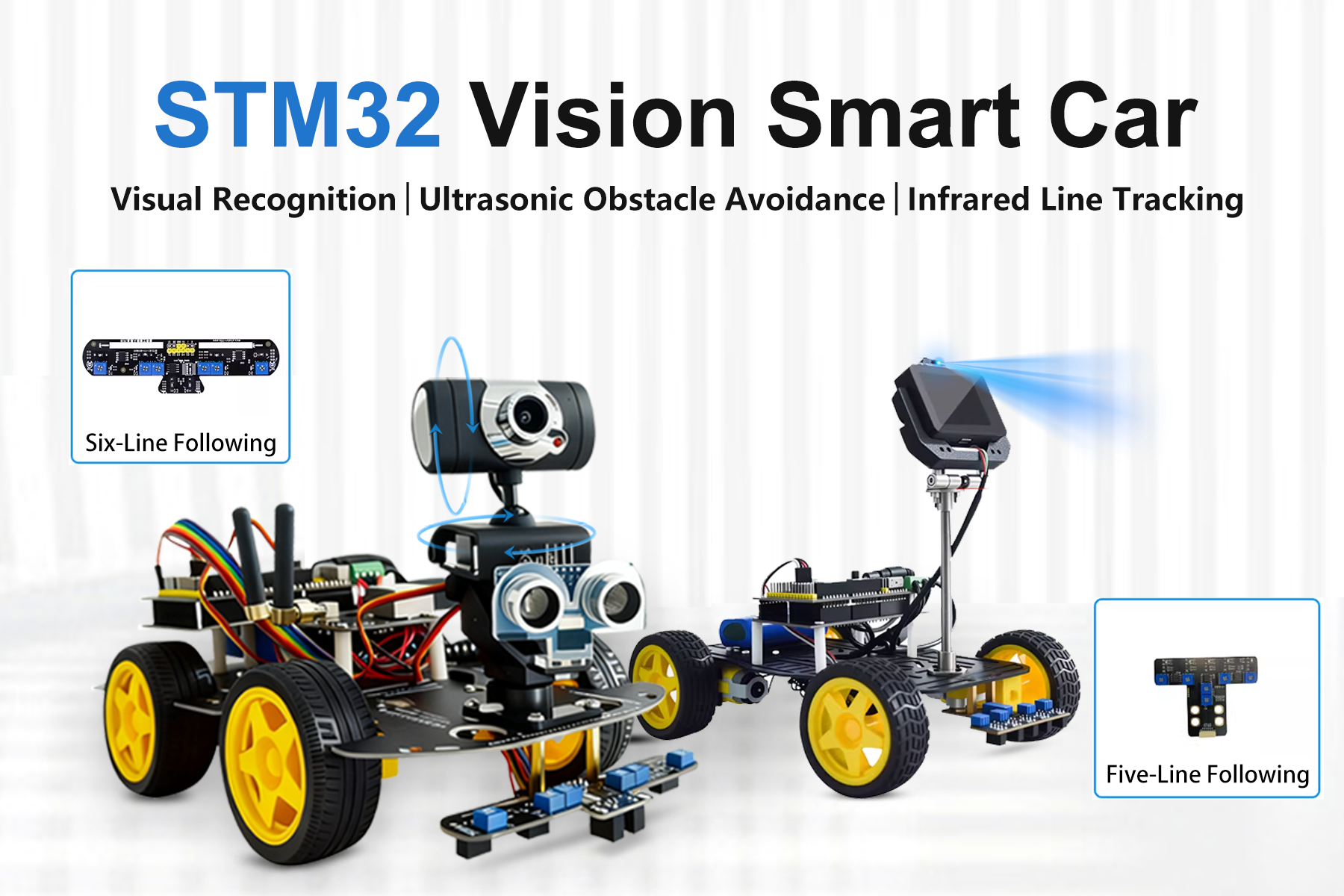
In the fast-evolving world of embedded systems and IoT, developers and hobbyists are constantly seeking versatile platforms that blend affordability with cutting-edge features. The latest buzz in the robotics community revolves around the DS STM32 Robot Car Kit from XiaoR Geek—a smart, programmable robot designed specifically for hands-on learning and prototyping. This kit isn't just another toy; it's a robust tool for exploring line-following, obstacle avoidance, and AI vision capabilities.
With recent advancements in affordable AI modules like the ESP32-S3, products like this are democratizing access to sophisticated tech, making it easier for beginners and pros alike to build real-world applications. Whether you're a student diving into STEM education or an engineer prototyping IoT solutions, the DS STM32 stands out for its expandability and open-source ethos. Let's break down its standout features, especially the ESP32-S3 vision module version, and why it's a must-have for your next project.
Core Features That Power Your Projects
At its heart, the DS STM32 Robot Car Kit is built around an STM32 microcontroller, offering a stable foundation for embedded development. The four-wheel chassis provides reliable mobility, while multiple expansion interfaces allow seamless integration of sensors and modules. XiaoR Geek backs this with comprehensive documentation, tutorials, and open-source code—perfect for accelerating your learning curve without starting from scratch.
- STM32 Main Control: A powerful core for processing and controlling robot operations.
- FPV Video Control: Real-time video streaming for remote monitoring and navigation.
- APP Control (Mobile/PC): Intuitive control via dedicated apps on phones or computers.
- WiFi/Bluetooth Connectivity: Wireless options for easy setup and remote operation.
- Four-Wheel Drive Chassis: Expandable design for custom modifications.
- Technical Support & Open-Source Code: Community-driven resources and direct assistance from XiaoR Geek.
- Speed Adjustment: Fine-tune performance for different terrains and tasks.
These shared features ensure smooth integration into IoT ecosystems, aligning with industry trends toward connected, programmable devices. Recent reports from embedded tech forums highlight how such kits are fueling a surge in DIY robotics projects, with demand spiking 30% year-over-year for vision-enabled platforms.
Comparing the Versions: Which One Fits Your Needs?
To help you decide, here's a quick comparison table of the two variants. Both excel in core robotics tasks, but the vision module edges out for AI enthusiasts.
| Feature | Five-Track + ESP32-S3 Vision Module | Six-Track + Ultrasonic Module |
|---|---|---|
| Line-Following Sensors | 5-channels | 6-channels |
| Primary Sensor Tech | ESP32-S3 AI vision (face/color/QR recognition) | Ultrasonic (distance measurement, obstacle avoidance) |
| Camera | 2-megapixel module | 480P HD camera |
| Chassis & Build | Aluminum alloy, elevated bracket, 2-DOF gimbal | PCB material, standard design |
| Communication | IIC communication, | GPIO communication, |
| Best For | AI projects, visual navigation, creative prototyping | Basic avoidance, precise line-following in structured environments |
| Expansion Potential | High (AI-focused add-ons like custom ML models) | High (sensor-heavy setups like multi-obstacle mapping) |

Ready to experience the future of personal robotics?
[Add to Cart] and start your robotic adventure today!